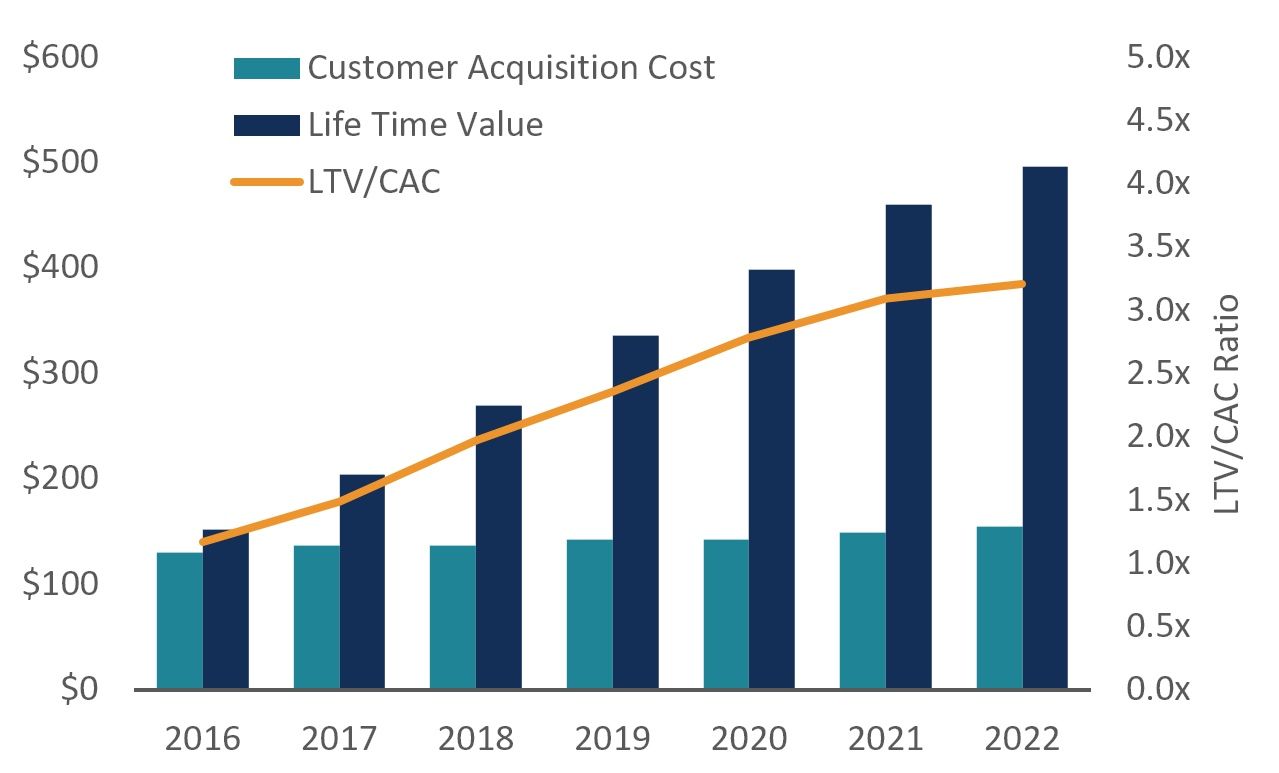
Ever spent a fortune acquiring customers who vanish after one purchase? You are not alone. And the problem is not your ads — it is what you are measuring.
Most brands fixate on CAC alone, optimising for volume over value. But here is the truth: a low CAC often means low-quality customers who drain resources and quietly damage profitability at scale.
CAC gets someone through the door. It tells you absolutely nothing about whether they were worth having.
“If you’re laser-focused on driving CAC lower and lower, you’ll end up celebrating wins like acquiring customers for $20 — only to find they buy once, ghost you, and cost more in support and refunds than they ever paid.”
It is the classic trap. Cheap acquisition feels great in the moment. But it quietly erodes profitability when those customers do not stick around and spend more. You are paying to collect one-and-done buyers who drag your margins down.
LTV:CAC — Your Business Health Check
LTV:CAC flips the script. Instead of asking “how cheaply can we acquire a customer,” it asks “how much is this customer actually worth relative to what we spent to get them?”
Pro tip: Use a 12-month LTV window. It is measurable, actionable and shows whether this year’s cohorts are trending up or down. Lifetime LTV is too fuzzy for fast decisions.
How to Nail It
- Cohort analysis. Group customers by first-purchase month — January, February and so on. Track their revenue over 12 months. Are cohort trends rising? Your retention is working. Falling? Something needs fixing.
- Segment by channel. Organic search customers might have 2x the LTV of paid social customers. Identify your highest-LTV acquisition channels and double down on them.
- Model scenarios. What happens to LTV if you boost second-purchase rates by 10%? Model it. Use this to build the case for retention budget before the conversation with finance.
Beware the Aggregate Trap
A blended LTV:CAC ratio of 15:1 looks impressive — until you dig into the segments. Half of your paid media might be loss-making while the rest carries the average. Aggregates hide leaks. Always break down by channel, cohort and product category before drawing conclusions.
How AI Changes the Equation
Predictive tools — whether that is Lifetimely, Daasity or a custom Python model — can forecast a new customer’s 12-month LTV within days of their first purchase, based on historical patterns. This means you can identify high-value prospects early and adjust acquisition spend in real time.
- AI predicts churn — flagging at-risk customers for timely win-back campaigns before they disappear.
- Generative AI crafts personalised retention sequences that address the specific reasons different customer segments tend to lapse.
- Predictive bidding tools in Google and Meta can be fed LTV signals — meaning your ad algorithm optimises for customers likely to have high long-term value, not just the cheapest first conversion.
“The brands winning in 2026 are not the ones with the lowest CAC. They are the ones who know the lifetime value of every customer segment before they scale.”
The Bottom Line
Stop optimising for the cheapest customer. Start optimising for the most valuable one. LTV:CAC is not just a metric — it is a strategic lens that changes how you allocate budget, where you invest in retention and how you think about growth.
What is your LTV:CAC ratio right now? If it is below 3:1, the framework above is your starting point.
We calculate it as part of every free audit. No spreadsheets needed on your end.
Cquenc writes the Playbook Series — practical growth frameworks built from real campaigns, real data and real results across multiple Brands.