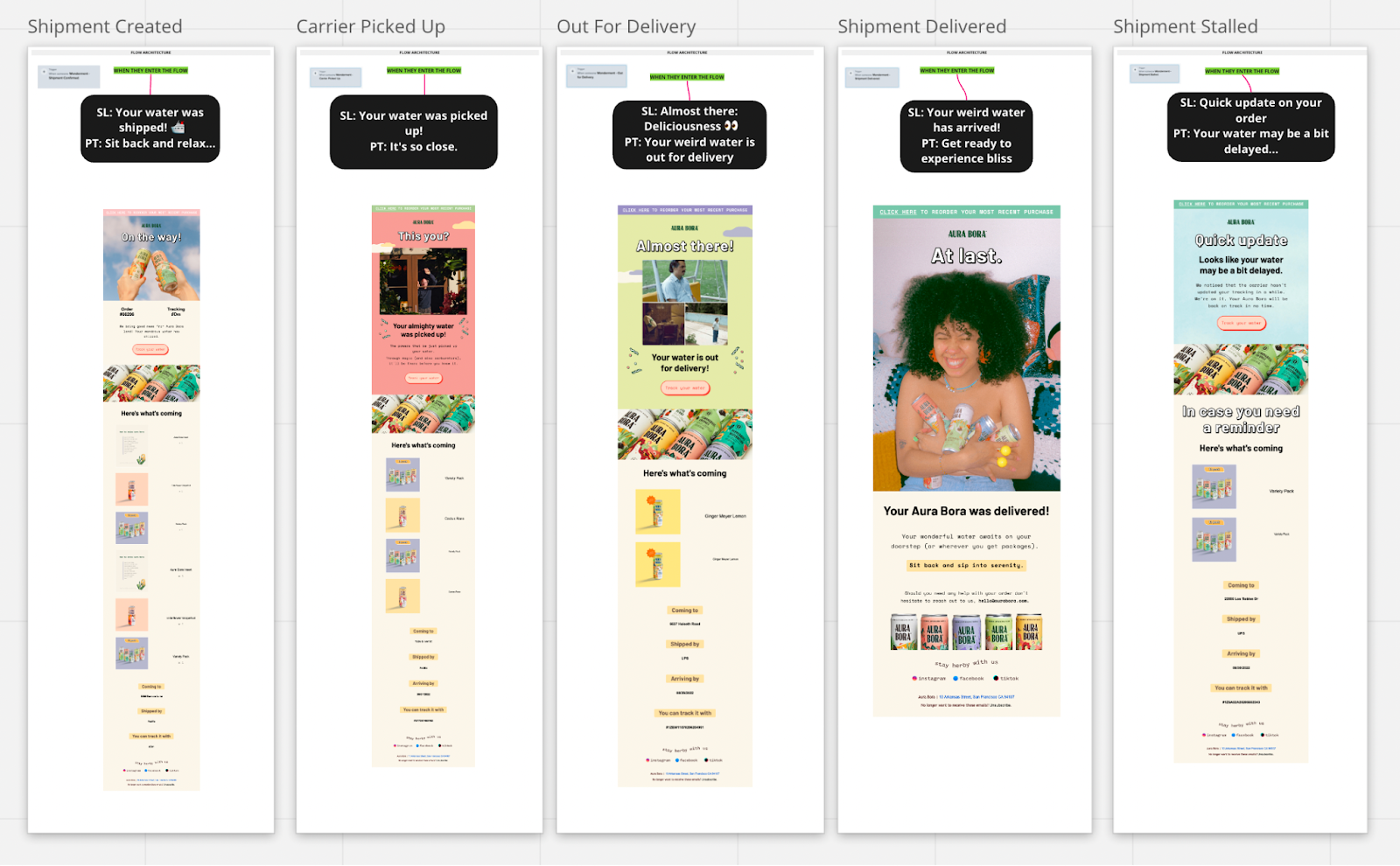
Klaviyo email revenue is one of the highest-return investments in eCommerce — but only if the flow architecture is complete. Most brands capture 20–30% of their potential email revenue because they stop at the obvious flows. The remaining 70–80% is sitting in flows they haven’t built.
The Foundation Flows Everyone Has
Welcome Series (3–5 emails): Introduces the brand, sets expectations, makes the first purchase offer. Most brands have this. Most have it wrong — too long, too promotional too fast, not enough brand story or buying-motivation content.
Abandoned Cart (3 emails): The highest-converting flow in most accounts. Email 1 at 1 hour (no discount), Email 2 at 24 hours (soft incentive), Email 3 at 72 hours (stronger incentive). If you only have one email here, you’re leaving significant revenue behind.
Post-Purchase (3–4 emails): Thank you, product education, review request, next purchase nudge. This flow sets the foundation for repeat purchase behaviour — it’s where LTV is built or lost from day one.
The Flows Most Brands Don’t Have
Browse Abandonment: Triggered when a subscriber visits a product page but doesn’t add to cart. Lower intent than cart abandonment, but high volume — typically 3–5× the trigger rate. Even a 1% conversion rate generates meaningful incremental revenue at scale.
Win-Back / Re-engagement: Targets subscribers who haven’t purchased in 60, 90 or 120 days. Segment by recency and send progressively stronger incentives. The final email should ask explicitly if they want to remain subscribed — this cleans your list while sometimes triggering a purchase from people who were on the fence.
Replenishment: For consumable products, triggered at the expected repurchase interval (e.g., 25 days after a 30-day supply purchase). This is the single highest-ROAS email flow available to consumable brands — and almost nobody builds it correctly.
VIP / High-LTV Customer: Triggered when a customer crosses a spend threshold. Unlocks exclusive benefits, early access and personalised offers. Customers who feel seen spend more — it’s that direct.
The Segmentation Layer
Flows without segmentation are generic. The most impactful segmentation dimensions: purchase frequency (one-time vs repeat buyers), product category (what they’ve bought determines what they want next), acquisition source (paid vs organic vs referral customers behave differently), and predicted LTV (Klaviyo’s predictive LTV model lets you treat high-value prospects differently from the start).
Build your flows first, then layer segmentation. Starting with segmentation before flows exist means building nine versions of something that isn’t working yet. Get the structure right, measure, then personalise.
Timing and Frequency
The answer isn’t “less is more” or “more is more” — it’s “relevance determines frequency.” A subscriber who browsed three products, abandoned cart, and hasn’t purchased in 45 days can receive 5 emails in 7 days without it feeling like spam — because every email is relevant to their behaviour.
The brands with the best email revenue aren’t sending more emails — they’re sending more relevant emails. Relevance is the multiplier on every other element of your email programme.
Measuring Flow Revenue Correctly
Klaviyo’s default attribution window (5-day click, 24-hour open) inflates flow revenue. Use a 1-day click, 1-hour open window for a more conservative and accurate measure of email’s true incremental contribution.
The benchmark that matters most: email as a percentage of total revenue. For a well-optimised eCommerce brand, email should represent 25–40% of total revenue. Below 20% means significant flow gaps. Above 40% often means under-investment in acquisition channels.
We audit Klaviyo accounts and build the missing flows. Book a free 30-min session.
Practical growth marketing frameworks built from real campaigns, real data and real results across eCommerce and DTC brands.
More from the blog
AI-powered growth marketing. Sydney-based, revenue-obsessed.
Company
© 2026 Cquenc. All rights reserved. Sydney, Australia.
Built with intent. Powered by AI.